
Stop Wasting Money on Roaming: The Best eSIM for Travel in 2025
eSIM for travel is the modern way to stay connected abroad without needing a physical SIM card. You simply purchase a digital data plan, scan a QR code to install it on your compatible phone, and you’re online instantly. This eliminates hunting for local SIMs at airports, offering affordable data with no roaming fees and letting you keep your home number active for calls and texts.
Why Switch to a Digital SIM on Your Next Trip
Switching to a digital SIM for your next trip eliminates the need to hunt for a physical SIM card at an airport kiosk or swap out your home card upon arrival. With an esim for travel, you can purchase and activate a local data plan from your phone before you even board the plane, ensuring connectivity the moment you land. This approach allows you to keep your primary number active for calls or texts, avoiding the hassle of juggling two physical cards. For frequent travelers, switch to a digital SIM streamlines the process, offering instant top-ups and plan changes without visiting a store.
How a Remote SIM Card Eliminates Roaming Fees
A remote SIM card eliminates roaming fees by connecting you directly to a local network in your destination country, bypassing your home carrier’s international agreements. Instead of paying your provider’s daily or per-MB roaming rates—which can reach $10–$20 per day—you purchase a local data plan from a digital SIM provider before or upon arrival. This remote SIM assigns you a local IP and tariff, so all data, calls, and texts are processed at domestic prices, not marked-up roaming charges. There is no physical card swap; you simply activate the eSIM profile, and your device treats the connection as native, effectively erasing the premium your home carrier would otherwise add.
By routing your connection through a local network, a remote SIM card removes the carrier surcharge that constitutes roaming fees, replacing it with standard domestic pricing for the duration of your trip.
The One-Kilobyte Setup That Saves You Money
The One-Kilobyte Setup That Saves You Money involves pre-loading a minimal eSIM profile—roughly 1 KB of data—to lock in a cheap rate before your trip activates full service. This tiny configuration bypasses expensive roaming triggers by establishing a digital connection on foreign networks immediately upon arrival. You avoid the carrier’s “first-kilobyte” fee that often costs more than an entire travel plan. The One-Kilobyte Setup That Saves You Money works because the eSIM’s provisioning only consumes this negligible data, preventing automatic daily roaming charges. It effectively buys you time to connect to free Wi-Fi and activate a bulk data package later. Q: Does The One-Kilobyte Setup use any of my high-speed data? A: No. This minimal handshake uses a separate allocation—typically 0.001 MB—erasing the risk of draining your primary plan.
Comparing Plastic SIMs vs. Virtual Profiles for Nomads
For a nomadic lifestyle, the core practical differences between a physical plastic SIM and a virtual eSIM profile lie in logistics and flexibility. A plastic SIM requires physical swapping, risking loss of the original card or damage to the tiny chip during frequent changes. Conversely, a virtual eSIM profile for nomads is stored directly on the device, allowing instant activation of a new data plan without hunting for a local store. This digital approach preserves your primary home number for two-factor authentication while traveling, a task impossible with a swapped-out plastic SIM. The tactile hassle of carrying multiple adapters is also eliminated.
- Loss Prevention: A plastic SIM can be physically lost or damaged; a virtual profile is permanently embedded in your device.
- Multi-Profile Management: Nomads can store several virtual profiles simultaneously, switching networks as they cross borders, unlike single-slot plastic SIMs.
- Immediate Activation: eSIMs activate via a QR code or app before departure, versus needing to locate a physical vendor upon arrival.
Key Factors for Picking a Global Data Plan
When picking a global data plan via an eSIM for travel, prioritize coverage breadth versus data speed to match your destinations. Check if the plan offers true local-network speeds or throttled roaming rates after a cap. Evaluate plan flexibility: look for top-up options without needing a new eSIM, and ensure the validity period aligns with your trip’s length—not your calendar. Consider whether a multi-region package is cheaper than a single-country plan for multi-stop itineraries.
A crucial insight: never assume “unlimited” data is usable—many plans slash speeds after a fair-use threshold, making maps and messaging frustratingly slow.
Finally, confirm the eSIM supports tethering if you need laptop connectivity, and read the fine print about data-only restrictions on VoIP calls.
Coverage Maps: Matching Networks to Destinations
Before you buy, check the eSIM provider’s coverage map for your specific destinations. A flashy global plan means nothing if its partner networks don’t reach the rural island or remote mountain trail you’ll actually visit. Zoom into the map and verify 4G/5G presence in the cities and airports you’ll transit through. Network roaming agreements differ, so the same destination might have perfect signal with one eSIM brand and dead zones with another. Your goal is to match the provider’s coverage patchwork to your precise travel route.
- Cross-reference the map against every stop on your itinerary, not just the country name.
- Look for native network partnerships listed—those often mean faster speeds than generic roaming.
- Check community forums for real-world signal reports in tricky spots like subway tunnels or hotel basements.
Data Allowances vs. Speed Caps in Popular Regions
When picking an eSIM for travel, you’ll often juggle data allowances vs. speed caps depending on the region. In Europe, plans typically offer generous data pools with full 4G/5G speeds, so you can stream maps freely. However, in parts of Asia like Thailand or Indonesia, you might find cheaper eSIMs with large data caps but a speed cap of 5 Mbps after a certain threshold—fine for messaging but frustrating for video calls. Meanwhile, North American eSIMs often prioritize strict data limits over throttling, so you’ll run out of data before speeds slow down. Always check which trade-off matters more for your destination.
Pay-As-You-Go or Unlimited: Choosing the Right Model
Choosing between a pay-as-you-go or unlimited data plan hinges on your usage habits. Pay-as-you-go suits travelers who need occasional maps or WhatsApp, avoiding wasted money on unused gigabytes. Unlimited is better for heavy streaming or hotspot work, but check for throttling after a soft cap. A 10-day trip with 8GB of pay-as-you-go often beats an unlimited plan with hidden speed limits.
For light users, pay-as-you-go saves cash; for data hogs, unlimited provides peace of mind—match the model to your actual daily consumption.
Getting Started Without a Physical Card
The usual travel prep of hunting for a local SIM card at a foreign airport disappears with an eSIM. Before your trip, you simply purchase a plan online, directly through a provider’s app or website. After landing, you flip off airplane mode, scan a provided QR code or input a confirmation code into your phone settings, and the eSIM activates instantly. No tiny card to fumble with, no passport needed for a store clerk. You’re connected while others are still queuing at kiosks. Your phone becomes the physical access point.
This eliminates the risk of losing or damaging a physical card, as your profile is baked into the device’s hardware.
You are ready to navigate, message, and stream from the second you step off the plane.
Checking Device Compatibility Before You Leave
Before purchasing an eSIM, confirm your smartphone is unlocked and eSIM-compatible device by checking the model number in your phone’s settings or the manufacturer’s website. Most modern iPhones (XR and later), Google Pixels (3 and later), and Samsung Galaxy S20/Note20 series support eSIM, but carrier-locked phones often block eSIM activation. Verify that your device allows multiple eSIM profiles and that your home carrier permits eSIM use for international roaming. Failing to check this before departure risks being unable to activate data upon arrival.
Always confirm your phone is unlocked and eSIM-compatible via model lookup and carrier policy before traveling.
How to Buy and Activate a Plan from Your Couch
To buy and activate a travel eSIM from your couch, open your provider’s app or website on Wi-Fi. Select a destination data plan matching your trip length and usage. After checkout, you receive a QR code or an installation link. Installation typically involves a single tap, which adds the eSIM profile to your device. Activation triggers upon first connecting to a supported local network after arrival.
- Browse plans and purchase via app or web.
- Access the eSIM delivery method (QR code or link).
- Install the profile in your device’s cellular settings.
- Enable the line upon landing for immediate data use.
Installing a Profile: Step-by-Step for iOS and Android
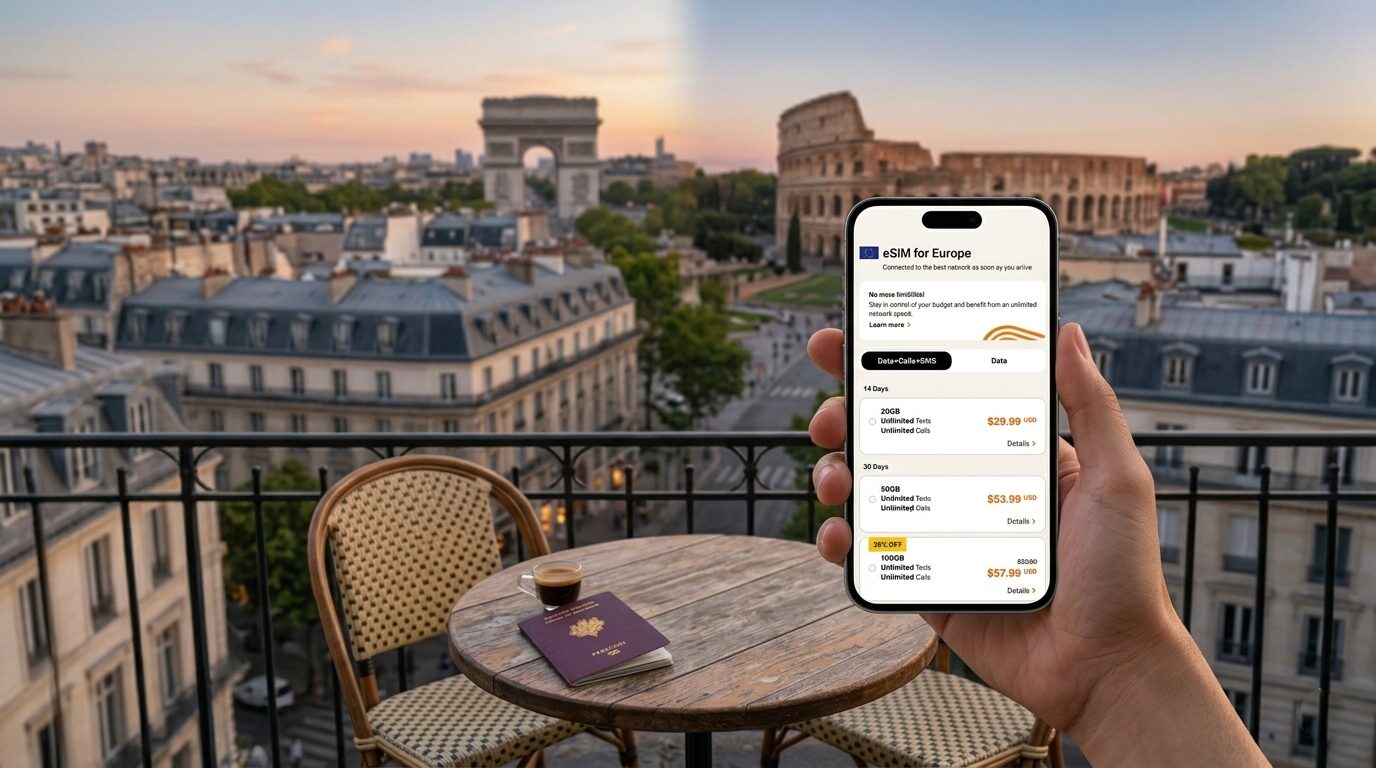
Once you purchase an eSIM for travel, the profile installation process differs slightly between devices. On iOS, go to Settings > Cellular > Add eSIM, then scan the QR code provided by your carrier. For Android, navigate to Settings > Connections > SIM Manager > Add eSIM and scan the same code. If scanning fails, both platforms allow manual entry via the details in your email. After installation, activate the new line and set it as the default for data.
Maximizing Connectivity Across Borders
For international travelers, maximizing connectivity across borders with an eSIM means bypassing physical SIM swaps and avoiding local carrier queues. You activate a digital profile before departure, instantly connecting to a local network upon landing. This allows seamless roaming between countries; your device automatically latches onto partner networks as you cross borders, ensuring you never lose signal. No hunting for Wi-Fi or paying exorbitant daily fees. Instead, you manage data from a single app, topping up for the next leg of your journey in seconds. This fluid, always-on connection keeps your maps, messaging, and work uninterrupted, turning multiple countries into one continuous, high-speed zone where you remain in control.
Seamless Switching Between Local Carriers
With an eSIM, you can perform instant carrier hopping as you cross borders, avoiding physical SIM swaps. The device dynamically selects the strongest local network from your pre-loaded profiles, ensuring you latch onto the fastest 5G signals without manual intervention. When one carrier gets congested in a city center, the system automatically shifts to a less loaded local provider, maintaining smooth video calls and map loads. This eliminates the dead-zone frustration of clinging to a single roaming partner, turning your phone into a hyper-local connectivity node that adapts to each country’s diverse infrastructure on the fly.
Seamless switching between local carriers means your eSIM constantly hunts for the optimal network, automatically jumping between providers to prevent signal drop-offs and slow data during cross-border travel.
Keeping Your Home Number Active with Dual SIM
For travelers, keeping your home number active with dual SIM is achieved by inserting a physical home SIM while using an eSIM for data abroad. This setup ensures your home number remains reachable for verification codes, banking alerts, and calls, with no need to forward or swap cards. Your device intelligently routes cellular services: local calls and SMS stay on the physical home network, while internet traffic flows through the travel eSIM. Just disable data roaming on your home SIM to avoid unexpected charges; the eSIM handles all connectivity.
A dual-SIM approach lets you preserve your home number’s active status for critical communications while an eSIM supplies affordable foreign data.
Using Wi-Fi Calling and Hotspots with a Data-Only Plan
When using a data-only eSIM abroad, Wi-Fi Calling acts as a critical bridge for voice and SMS without a separate cellular line. To activate it, enable Wi-Fi Calling on your home carrier’s settings before departure; the data-only eSIM will handle the internet backhaul for inbound and outbound calls. Conversely, tethering from your primary device to another phone transforms your eSIM into a portable connectivity hub for laptops or tablets. Ensure your data plan explicitly allows hotspot usage, as some providers throttle or block it. Configuring APN settings correctly is often the overlooked step that makes this entire workflow function seamlessly.
- Verifying your home carrier supports Wi-Fi Calling over third-party data networks is essential before testing abroad.
- Use a dedicated eSIM profile for hotspot data to avoid draining your high-speed daily allowance from the primary eSIM.
- Disable automatic carrier selection on the hotspot device to prevent it from falling back to expensive roaming networks.
Cost Comparisons for Short Trips and Long Stays
For short China eSIM trips (1–7 days), regional eSIM plans often beat daily roaming passes, offering fixed data caps at a flat rate that beats per-day carrier charges. However, a **key insight** emerges for long stays (2+ weeks): monthly or 30-day plans slash per-gigabyte costs by up to 60% compared to stacking short-term plans. A traveler spending three weeks in Europe might pay $30 for a 10GB monthly eSIM, versus $50 for three separate 5-day plans with the same total data. The equalizer? If your short trip uses under 3GB, a simple 7-day plan remains cheaper than committing to a monthly subscription. Always calculate your actual data needs before picking a validity window.
The real savings hinge on data volume: monthly plans win for heavy usage over 5GB, while short-day passes dominate for minimal browsing under 3GB.
Single-Destination Budgets vs. Multi-Country Passes
For a single-destination short trip, a dedicated local eSIM plan usually beats any multi-country pass on price, as you avoid paying for coverage you won’t use. Single-destination budgets maximize value by purchasing only the specific data allowance and validity for that one country. Conversely, for long stays or trips crossing multiple borders, a multi-country pass becomes more economical despite a higher upfront cost, consolidating coverage and eliminating the need to buy separate eSIMs. The break-even point often appears when your itinerary includes three or more countries within a short timeframe.
| Aspect | Single-Destination Budget | Multi-Country Pass |
|---|---|---|
| Cost per GB | Often lower per GB for a single country | Higher per GB but covers many regions |
| Best for | One-country trips under 14 days | Trips spanning 3+ countries or 30+ days |
| Management | One simple plan, no overlap | One profile covers multiple networks |
Hidden Fees: Throttling, Top-Ups, and Expiration Dates
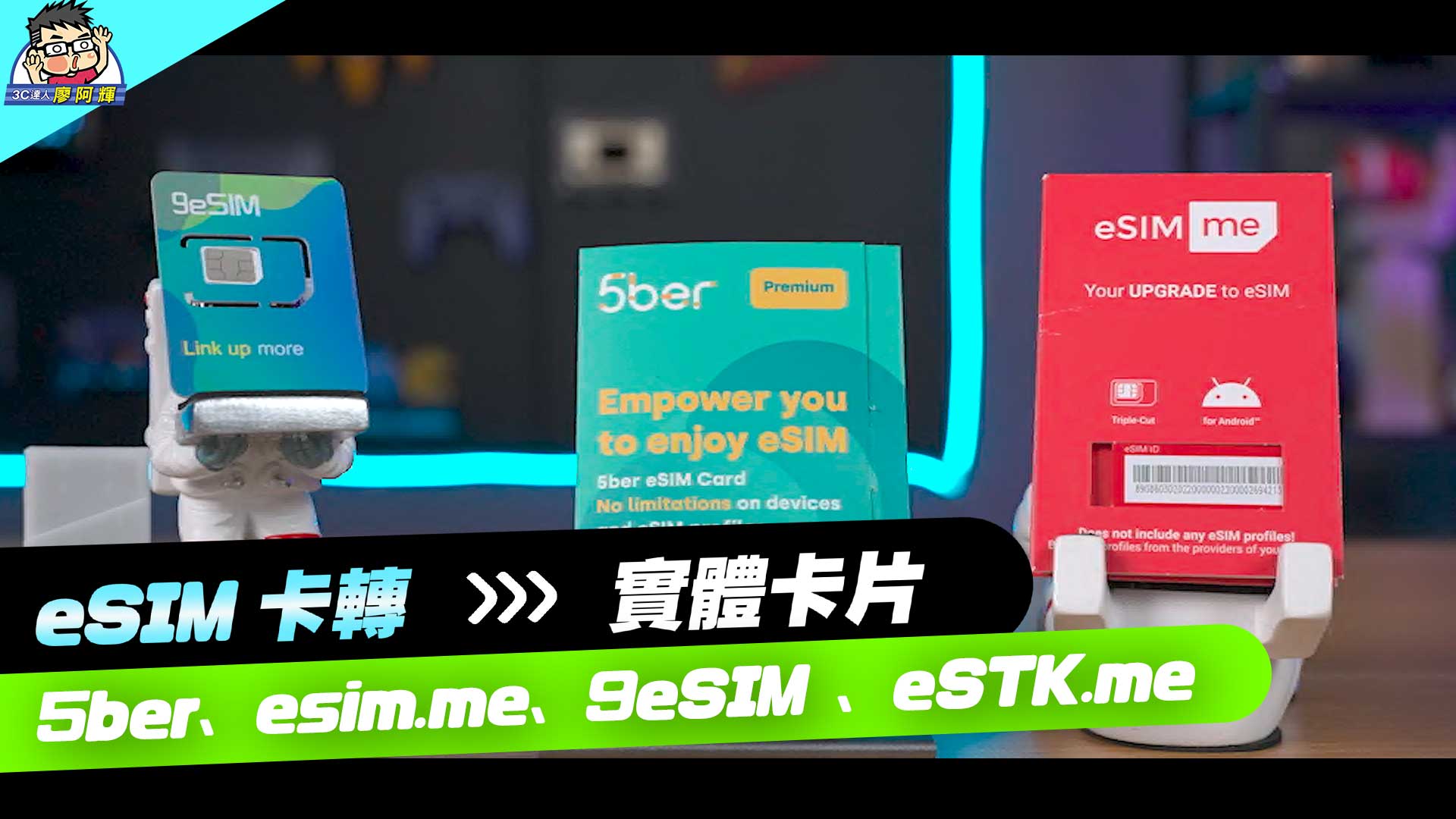
When selecting an eSIM for travel, hidden fees from throttling, top-ups, and expiration dates often erode the apparent savings of a plan. Throttling typically activates after a specific data cap, dropping speeds to near-unusable 128 kbps without clear disclosure in the plan details. Top-up costs can be inflated per gigabyte compared to the initial purchase, and many eSIMs impose rigid expiration dates on both prepaid data bundles and top-up credit, meaning unused data is forfeited entirely after 7, 30, or 90 days. Always check the fair-usage policy and the validity window for add-ons before committing.
- Throttled speeds may render maps and messaging unusable after hitting a soft cap.
- Top-up rates often exceed the original per-GB cost by 50% or more.
- Expiration dates apply to both the plan and any unused top-up balance.
Regional Providers vs. Global Aggregators: Which Wins?
For short trips, global aggregators often win on convenience, offering immediate eSIM activation and a single interface for multiple countries, though their rates are typically higher. For long stays, regional providers usually deliver lower per-GB costs and better native network speeds in their coverage zone, but require planning for multi-country itineraries. The decision hinges on duration-specific eSIM value: aggregators simplify brief, multi-destination travel, while regional specialists excel for extended, single-region stays.
- Global aggregators provide easy, one-click plans for short, multi-country trips.
- Regional providers offer cheaper long-term data for stays of a week or more.
- Aggregators may use throttled secondary networks; regionals often use primary local carriers.
- For a single-country long stay, a regional eSIM is almost always more cost-effective.
Troubleshooting Common Issues Abroad
When your travel eSIM fails to connect abroad, first force a manual network selection in your phone settings to bypass automatic roaming delays. If data remains slow, troubleshooting common issues abroad often means ensuring your phone’s APN settings match the eSIM provider’s exact values. For complete connectivity loss, toggle airplane mode or restart the device to trigger a fresh network registration. If your eSIM still doesn’t activate, scan the QR code again in a stable Wi-Fi zone—installing it abroad can fail if you lack a data bridge. Resolving eSIM connectivity problems quickly keeps your navigation and messaging working from touchdown onward.
What to Do When Activation Fails on Arrival
If your eSIM fails to activate upon arrival, first toggle Airplane Mode on and off, then manually select the eSIM’s specified network operator from your device’s carrier list. Ensure data roaming is enabled for the eSIM line. If still offline, scan your QR code again from a Wi-Fi hotspot or confirm the eSIM profile is correctly installed under Mobile Plans. Should the issue persist, restart your phone entirely. Most providers also offer live chat support, so connect via airport Wi-Fi immediately. This systematic check typically resolves activation failures within minutes.
Q: What to Do When Activation Fails on Arrival if network selection doesn’t appear?
A: Force a network search manually, or re-insert your physical SIM temporarily to trigger the eSIM profile’s registration.
Managing Slow Speeds in Tourist Hotspots
Managing slow speeds in tourist hotspots often requires switching your eSIM’s network provider manually within your device settings, as local congestion from thousands of users can throttle a single carrier. You can also temporarily disable 5G and lock your phone to 4G/LTE, which often provides more stable dedicated bandwidth for travelers during peak hours. Download offline maps and cache essential data before entering dense areas like markets or monuments. For urgent connectivity, schedule data-heavy tasks for early morning or late evening when network load drops.
- Manually select a less congested local network via your eSIM’s carrier list.
- Toggle from 5G to 4G/LTE to avoid overcrowded high-frequency bands.
- Pre-download offline maps and content for crowdsourced zones.
- Shift heavy downloads to off-peak hours like dawn or midnight.
Handling Lost Phones or Changed Plans Mid-Trip
If your phone is lost or destroyed mid-trip, an eSIM allows immediate remote reactivation of service on a replacement device without visiting a local store. You simply log into your eSIM provider’s account, suspend the old eSIM, and download the same plan onto a new phone. For changed itineraries, you can purchase a new eSIM for the updated destination and keep your existing plan active until its data expires, avoiding wasted credit. Some platforms let you top up or switch regions directly from the app, ensuring seamless connectivity when plans shift unexpectedly.